Publications
Books, peer-reviewed articles and government reports on project management, cost-benefit analysis, AI and infrastructure economics.
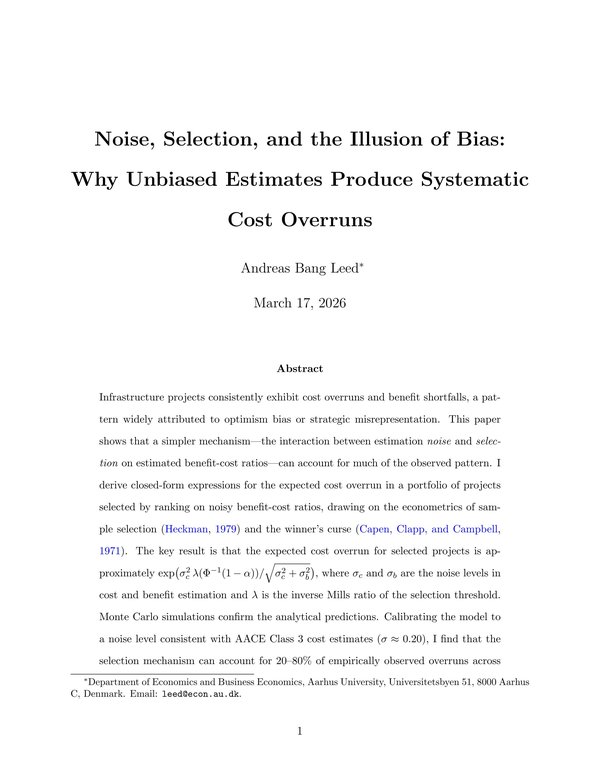
Noise, Selection, and the Illusion of Bias: Why Unbiased Estimates Produce Systematic Cost Overruns
Shows that estimation noise combined with benefit-cost-ratio-based project selection can account for 20–80% of observed infrastructure cost overruns without invoking any estimation bias. Derives closed-form expressions and calibrates to international data across eight project types.
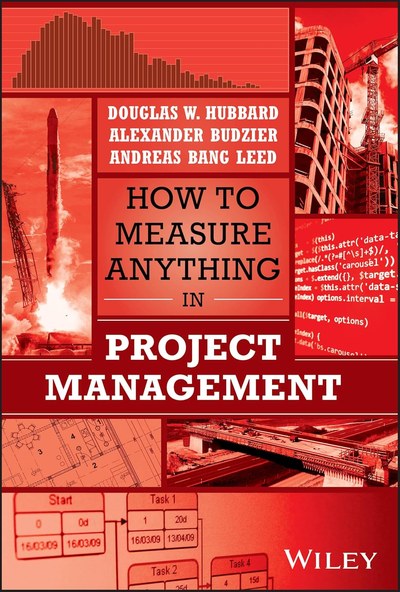
How to Measure Anything in Project Management
A practical guide to evidence-based project decisions. Drawing on the world's largest project database, this #1 bestseller replaces intuition with measurement, covering calibrated estimation, Monte Carlo simulation, reference class forecasting and the expected value of information.

Maintaining Capital Discipline in the Rush to Net-Zero Energy Systems
Examines how the urgency of the energy transition can lead to weakened cost controls on capital projects. Using evidence from large-scale energy infrastructure, the paper argues for maintaining rigorous capital discipline even as investment accelerates toward net-zero targets.

AI in Action: How the Hong Kong Development Bureau Built the Project Surveillance System
Documents the design and deployment of an AI-powered early warning system that monitors over 200 capital projects in Hong Kong. The system uses machine learning to detect signals of cost overrun and schedule delay, enabling proactive intervention by the government.

Updating the Evidence Behind the Optimism Bias Uplifts for Transport Appraisals
Commissioned by the UK Government, this report updates the empirical evidence underlying the optimism bias uplifts used in transport project appraisals. The analysis informed policy guidance that shapes how billions of pounds of public investment are appraised.
Quantitative Cost and Schedule Risk Analysis of Nuclear Waste Storage
Applies quantitative risk analysis methods to nuclear waste storage and decommissioning projects. Using reference class forecasting and Monte Carlo simulation, the paper demonstrates how to produce calibrated cost and schedule estimates for highly uncertain mega-projects.
Practitioner Articles
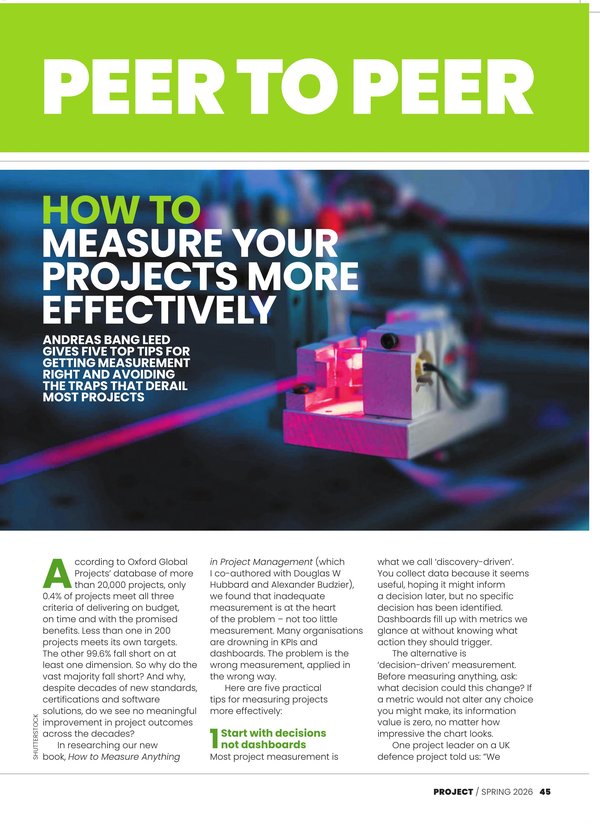
How to Measure Your Projects More Effectively
Five practical tips for getting project measurement right: start with decisions not dashboards, beware the analysis placebo, embrace uncertainty through probability, measure what matters not what is easy, and test your methods.
Interested in Collaborating?
I'm always open to research collaboration, media enquiries and speaking opportunities.