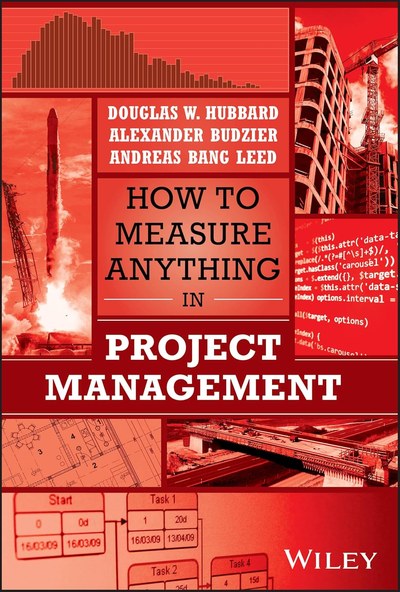
How to Measure Anything in Project Management
Leading a successful project requires more than haphazard KPIs and OKRs. In this book, management experts Hubbard, Budzier and Leed present a practical framework for decision making and risk management grounded in measurement.
Drawing on the expansive Oxford Global Projects Database, they reveal how many popular methods amount to "analysis placebo" and offer instead robust, hands-on tools to forecast outcomes, reduce risk and improve decisions.
What Leaders Are Saying
Truly successful projects are not those that just meet predetermined metrics or outputs. Project professionals need to pursue the value critical stakeholders believe they've received from their efforts. How to Measure Anything in Project Management reiterates this critical nuance and provides a roadmap for those seeking to fuse data with perceptions. It reshapes how organisations make decisions, deliver end-to-end value, and build lasting resilience.Pierre Le Manh – President and CEO, Project Management Institute (PMI)
A bold and timely book that redefines how we think about project success. By proving that anything that matters can be measured, the authors equip project professionals with tools to make smarter, evidence-informed decisions. This is a must-read for anyone serious about creating a world in which all projects succeed.Professor Adam Boddison OBE – CEO, Association for Project Management (APM)
As someone who has dedicated a career to advancing project management, I believe this book is one of the most important contributions to the field in recent years. And it comes at the right time, as AI, data science, and systems thinking converge to reshape how decisions are made.Ricardo Viana Vargas – PMI Fellow and former Chair of the Board, PMI
To control projects, we need to measure what is important and not only what is easy to measure. This book lives up to its title. It provides practical guidance and useful tools to measure what matters in projects.Tomas Carlsson – President and CEO, NCC
This book promotes data-driven decision-making to remove the 'gut feel' approach and destroys the myth that some things are impossible to measure. I would recommend this book to those who consider themselves to be thought leaders in the project management and project controls fields.Paul Kidston – Lead author of Project Controls in the 21st Century (APM), reviewed in Project journal, Winter 2025
Audiobook
Also available as an audiobook, narrated professionally and released alongside the hardcover edition.
About the Authors

Douglas W. Hubbard
Founder of Hubbard Decision Research and inventor of Applied Information Economics, Doug brings 35 years of experience applying quantitative methods to strategic decision making.

Alexander Budzier, PhD
A fellow at Oxford's Said Business School and an award-winning researcher on IT, infrastructure and mega-projects. Alex translates cutting-edge research into practical insights for leaders.
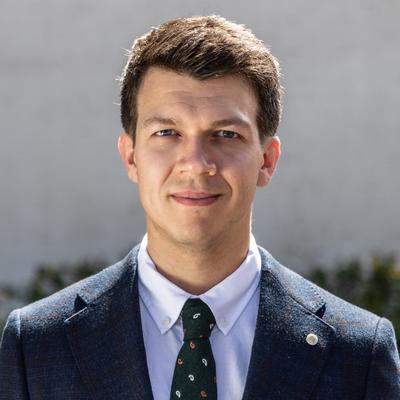
Andreas Bang Leed
Head of Data Science at Oxford Global Projects and PhD Fellow at Aarhus University. Andreas develops AI-driven decision tools and leads analytics for major infrastructure projects worldwide.
Media & Press
Interviews, podcasts and articles about the book.
How to Measure Anything in Project Management
Project Flux Podcast · Dec 2025
Project Risk Lab
Try the interactive tools from the book. Test your calibration, run Monte Carlo simulations and explore reference class forecasting.